Cover story · City · 8 min
The night shift is a city.
After the last train, the streets do not go quiet. They simply change hands.
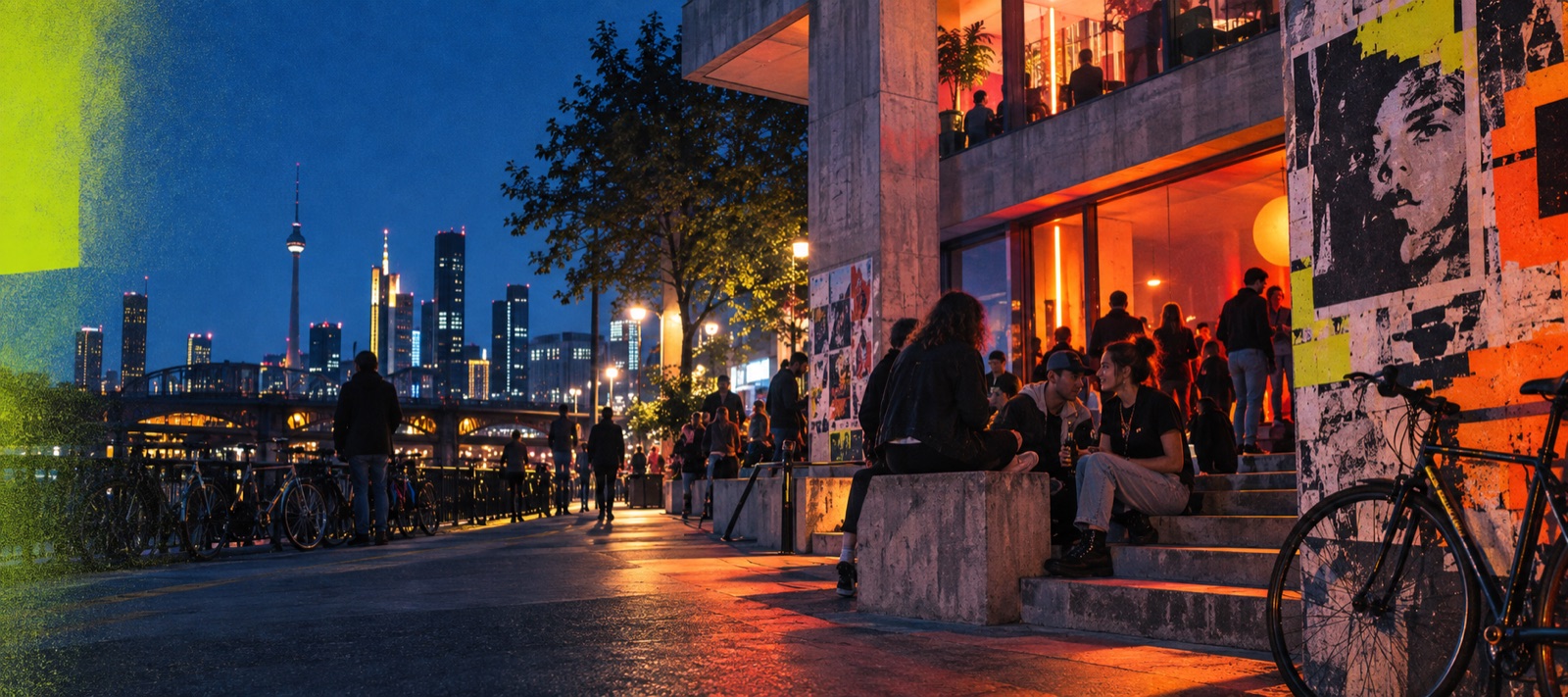
At 01:13 the pavement still holds the day’s warmth. A courier locks a bike beside the river, two sound engineers carry a flight case down three concrete steps, and a baker turns on a light behind a steamed-up window. The official day is over. Another one has already started.
The night city has its own rhythm. Distances feel shorter. Empty tram stops become meeting points. A doorway can be a smoking area, a stage entrance and a tiny public square at the same time.
The quiet hours are not empty. They are simply less advertised.
That is why we started looking after midnight. Not for spectacle, but for the ordinary work and accidental culture that keeps a place alive: rehearsal rooms under offices, the kiosk that remembers everyone’s order, the first train filling with both early workers and late dancers.
By 05:42, the edges begin to blur. The bakery opens. The venue closes. One group heads home while another unlocks the city. For a few minutes, both versions exist together.
Back to all stories